It was May 1964 and the world was buzzing of hot topics, none hotter at the time than the Vietnam War. President Kennedy had been killed on November 22, 1963, and President Lyndon B. Johnson was the Commander and Chief of the Military as President of the United States. After the French had given up supporting the South Vietnamese to maintain their freedom the US had stepped up to support what became to be known as South Vietnam. The USA became involved in Vietnam because it feared the spread of communism but it incited China to become concerned. US involvement was approved by President Kennedy and South Vietnam President Ngo Dinh Diem. It was implemented in early 1962 and involved some forces relocation, village internment, and segregation of rural South Vietnamese into new communities where the peasantry would be isolated from Communist insurgents.
To go back further into the initial relations, history and politics of the conflict of South Vietnam is beyond the scope of this story and to that point it is indeed the story of one man’s view and life for approximate one and one half to two years as a solder in the United States Air Force.
The conflict had accelerated the draft and the army was recruiting. It was just a matter of time before all this generation of young men would be called to serve. Being drafted into the Army amounted to two years active duty and four years of active reserves. It most certainly included the high probability that serving in Vietnam in one’s future. The options were few but included going to college, flunking the physical exam, draft dogging or enlisting in another service of your choice. Enlisting in another service could include the same terms for joining the Army as those of someone drafted, or serving a six-year career for the Navy, Marines, Air force, Coast Guard etc. but, only four years of active duty and two years of inactive reserved would be necessary. That meant that once your four-year tour of duty was complete you could reenlist and sign up for another four years or you could exit and spend two years of inactive reserve duty which did not require any further attendance of military duty activities. But it did include the slim probably the individual could be called back in to complete those last two years should a national emergency develop. Other options to avoid being drafted were available including “reserve duty” and Peace Corps as opposed to active duty.
Enter one very young and naïve individual who had spent three years in a vocational technical high school with three years of training as a machinist in an industrial based curriculum. All this draft information was an eye opener. Most all graduates of the machine shop curriculum could start an apprentice program immediately upon graduation and become a journeymen machinist quickly after that. The pay for that certification could put an individual into the medium income bracket of the time pretty easy.
The training was exceptional at San Antonio Vocational & Technical High School which had “one of the best” if not “the best” machinist training programs in the country. The shop was exceptionally equipped and might rival any high school machine shop in the country but, for sure in the State of Texas. Running parallel with the program was a VIC program which now goes as VICA or the “Vocational Industrial Club of America”. This was a program designed to further train the individual in parliamentary procedures and participate in speed and skill competitions. It has become a phenomenal national program and very successful in improving educational experiences. Our trainee had graduated with honors and Vice President of the Fox Tech Machine Ship VIC club in his senior year. The High School renamed to honor Louis W. Fox is in San Antonio, Texas our individual’s hometown.
Upon graduation the first thought was to find a job and local machine shops were recruiting kid’s right out of high school. San Antonio Tool & Die snapped up four of the 1964 graduating class members and suggested that they could start immediately. Our young and naïve individual started with them by June 1, 1964 shortly after graduation. He was still 17 years old. The latest technology included electrode drilling machines which could produce any shape of a hole in metal, but making the electrodes was dirty work. This was due to the need to create an electrode made of a solid carbon compound. The powder from the machining of the electrode coated everything like pencil lead being ground up and tossed in the air and on the operator. Coal miners had nothing on these guys. The electrodes where shaped like an eye brow. They were being used to form the opening where later a fin was installed, welded and formed the final product. The final product was turbine blades for jet engines.
For San Antonio Tool & Die manufacturing turbine blades was a new undertaking and soon was unable to meet the demand. Having lost the contract for turbine blades the need was high to reduce cost so unfortunately the first to go were the trainees. It was the first of August and San Antonio Tool & Die had been such a great opportunity which was now gone. Without much thought and a look at the calendar, for our teenager, it was suggested that maybe getting the military obligation out of the way would be good.
What was then Louis W. Fox Vocational & Technical High School. That name had just been changed from its original name of San Antonio Vocational & Technical High School. Seeing solders walking the streets in San Antonio was commonplace. The Army also had a large contingency of soldiers as San Antonio was home base for the historical Fort Sam Houston named in honor of the infamous Sam Houston of the ALAMO. It was also the home of Kelly AFB, Texas, at that time known to have the largest airplane hangar in the world.
Enters our Recruit Roberto L. Flores Born 10-04-1946 Robstown, Texas (Nueces County)
At the time of joining the service, the family had lived in San Antonio since 1951, so SA was home. He had received all of his education there starting with the first grade and ending with the 12th. He graduated in May 1964. Having to have a parent’s permission to enlist at age 17, our recruit was convinced by Mom that the Air Force should be the choice as two of the family had already taken that path. So, by August 7th, 1964, our main character was arriving at boot camp. The best news was that the boot camp for the United States Air Force is Lackland AFB, Texas which is located just outside the outer city limits of San Antonio, Texas. The recruiting office arranged for a school bus to take the recruits from their office downtown out to the Airbase. He served his first 8 weeks of service at Lackland AFB, Texas. The receiving team at Lackland had prepared a welcoming committee to receive the group along with other groups from all over the country. After some instruction and welcoming speeches the groups were divided into several subcategories of approximately 60 men. Flight 905 & 906 were made up out of this group and ended up going to the opposite ends of a neighborhood composed of maybe 12 barracks. This complex and others surrounded a mess hall and school buildings. In other parts of the campus was asphalt pads used for teaching the recruits to march. The old “left, right, left right to the rear march” that most folks associate with military training. But, for the bus load from downtown San Antonio most of the recruits ended up in these two sister units. It was funny to note who the newest recruits were as revelry sounded at 5:30AM every morning and the neighborhood gathered in strict organized formations in front of their respective barracks. The new recruits still brandished their civilian clothes while the rest of the neighborhood had matching fatigue uniforms in Olive Green. The new recruits were jokingly called Rainbows. Their training started with just the clothes on their back and a GI pith helmet. That lasted just a few days then followed by the recruits being escorted to the “green monster”. There a duffel bag was filled with everything the new recruits would need. To that point all items brought to camp were to be destroyed or sent back home. Having lost his father at a young age he had become sentimentally attached to his Fathers Gillette razor that used double edged blades. He could not stand to part with that, so he kept that. For several days into the training no one had spotted the contraband, and the new recruit had been sure not to use it. That keepsake would come back to haunt him all too soon. There was a place for everything in the living quarters, and everything had to be put in its place. Every piece of clothing would later be stamped with the last four of the assigned Air Force serial number F7720. Shoes were included and the heavy-duty brogans would be with you through your entire career. Although resoling was readily available in those days the boots were the shoes that got the most use and would have been restored. They were expensive but very well made. Restoring the leather and keeping the shoes polished to a high sheen was a daily chore. The term “spit shine” was easily recognized by any GI. The metal lockers and wooden footlocker had strict rules for where each item was to be placed and kept like new. A laundry bag hung in a specific spot on the bunk bed and laundry was collected there until laundry day. Inspections were made without notice and they happened at the most inopportune times.
With boot camp on the outskirts of San Antonio gave our recruit time to run home on weekends when he was allowed off the training base. In his words, “I am so glad Mom Flores talked me into joining the Air Force instead of the Navy like I first thought to do”. For first six weeks the training included learning to march in perfect formation. Several turns were taken to work the mess hall and do “Kitchen Police” aka KP or Kitchen Patrol, secondly to incur extensive training on the rules of military law, The Uniform Code of Military Justice aka UCMJ. Of course, there was daily physical exercise and classes on the proper handling of the Flag plus the role of the military in the US were usually conducted every day. Weapons training and marksmanship classes were exciting. Aide: There was plenty of humor from the “Training Instructors” and in most sessions that included lots of inappropriate material but, very funny none the less. It was an all-male group at that time. At the end of 6 weeks most recruits had been tested for certain traits that fit the need of the jobs the Air Force would need to fill its mission around the world. For those that needed further training in their field that training was conducted in Tech Schools. For Machinist that school was conducted at Chanute AFB, Illinois at that time. It was an honor to have served with recruits that would protect us on the front line as well as from the air. Many would reenlist and go on to become officers, pilots and medical support specialist. So parting was happy and sad. Everyone knew what they were going to be facing for their time in the service but there were exceptions. For our recruit a bi-pass specialist test was administered, specifically for his aptitude and experience as a machinist. The recruiter had made him privy to ask for the test, but the test had to be requested. It was a great help as the test was requested, administered and completed with an above average result. What that all meant was that no tech school was required and he would go directly to a vacancy as a three-level machinist and begin his “on the job training” for the rating of five level that allowed for self-management of assigned tasks in the field. It would take another two weeks in the barracks to await orders but, life was much easier as the consolidation with the Flight 905 and flight 906 gave that group more leisure time. This allowed for more freedom and weekends on the town. It was an exciting time but was still stressful as where our recruit would end up was still a mystery. Would he get to stay in Texas? He had never been out of the state. Would he end up in Vietnam or somewhere else in the world? After having been familiar with his older brother’s time in service there was a strong desire to stay close to home.
THE NEW ASSIGNMENT
The orders arrived and the duty based for working in the field was McConnell AFB, Kansas. After sweating out how to get to a place he had never been and within the budget allowed for travel he was able to make a decision. Airline discounts for service men flying, military stand-by, allowed him to fly for the first time in his life. God Bless Braniff Airlines. He left from San Antonio, Texas on a United DC-6B October 14, 1964, after having celebrated his 18th birthday at home Oct 4. To see him off were Mother Estella L. Flores & Grandmother Librada (Ande) Ochoa Lopez, Brothers Raul & David Lee Flores and a few close friends.
Orders are to be obeyed and there are no excuses. You do what you are told to do. Start at top level of the processing chain on arrival at the new duty station and work your way down to the local level in the incoming processing routine. The “Permanent Change of Station” orders arrived, and our recruit is assigned to the 355th Tactical Fighter Wing at McConnell AFB, Kansas. Sharing the base with the 23rd Tactical Fighter Wing & the 81st Strategical Air Command. (SAC)
At this point intime in history, McConnell AFB, Kansas was a training base. The Strategic Air Command has had its space invaded but was still maintaining missiles & silos in the Midwest. The Tactical Air Command (TAC) brought in about eight squadrons of F105 F & D models of aircraft. That is 18 airplanes per squadron times eight squadrons, one hundred and forty-four airplanes make up the two wings. The good news is that some airplanes and support personal are on TDY, “Temporary Duty” elsewhere almost all the time. Some of the airplanes are in Turkey and some of the planes are in Yokata, Japan which would normally be there at Mconnell. The 23rd TFW (Tactical Fighter Wing) “Flying Tigers” had four squadrons and also some on TDY. So makes sense there may have been less than 72 airplanes from the 23rd TFW and maybe only 36 from the 355th. These planes and pilots that were here were flying practice bombing and shooting runs at the gunnery range near Salina Kansas. Planes were loaded with 25lb. bombs, or at times or with 2.5-inch rocket pods but always with a 20mm M61 Vulcan “Gatling” gun which was a trademark of the F105F/D model aircraft.
Ever haunting this McConnell AFB is Boeing Aircraft, Wichita. The manufacturer made fuselages here and shipped them back to Renton, Washington for final assembly. At this time, it may be an older model of airplane parts being manufactured also but could easily have been the newer Boeing 737 models. The awesome KC 135 air refueling, flying service station aircraft came in and out almost daily for maintenance and modifications at Boeing as well. They are a Boeing product that the Air Force has used for many things but air refueling was one. There is nothing like seeing an alert situation and seeing wave after wave of KC135 aircraft taking off seconds apart.
Our recruit looks back of an imagine seeing his own exodus of the 355th & a combination of personal of the 23rd TAC fighter wings leaving November 17, 1965. Hundreds of soldiers and 10’s of aircraft including F150’s C124’s, C-130s all headed for Southeast Asia. Young naïve solders following orders some never to see their family again. Our recruit can only imagine being in his wife’s shoes seeing him fly away. She could have been really pissed with this situation. She is carrying a baby that will be born before our recruit gets back home. Yet, she was so strong and so brave. That story is under separate cover.
But, let’s get back to his few first days at McConnell AFB, Kansas. On the first day of “processing in” it is necessary to walk to the headquarters building on the Boeing side of the runway about a two mile walk from the barracks. In the shadows of Boeing is also the Kansas Air National guard hanger, they are flying F100 Super Sabers at the time. Members of the guard were called “Weekend Warriors” as the majority of its members work caviling jobs and serve for the military part time. Meetings are generally on the weekends. The Air Guard personal probably didn’t realize that they too will be called to active duty and serve in Southeast Asia. On the walk to headquarters a nice guy offers our recruit a ride to begin his processing chores. Another nice Airman gets me back to the barracks once that days processing is complete.
The day goes by quickly and our recruit is signed up to get paid, insured that part of his pay will go to his Mother and two baby brothers he’d left behind. Dad, Leonard Sr. has been gone 6 years and some months. The paper work is all in order and our recruit is officially assigned and established in the 355th Tactical Fighter Wing of McConnell AFB, Kansas.
The chow hall is a short walk away from the barracks where he resides and so he knows where to get food. He knows where to go to get any mail that might come in. The address to receive mail is a little intimidating for folks at home as not many of the family have ventured far from home and few in the service of our great country. Serial numbers and your rank on your address is vital for receipt of mail.
The evening comes and the barrack is empty and lonely. Our recruit cleans up and wonders out into the day room. (The day room is an area of the barracks where airmen go to watch the news on television or whatever the majority of the group wants to watch). Our recruit has no concept of what is going on in the world or that the Vietnam War is in full force. He just knows that he is in a very strange place, lonely and maybe a little scared. Earlier in the day our recruit had lied in bed and cried from the loneliness and fear of the unknown.
By evening and the end of the workday, things change quickly. As guys come home from a day on the flight line and recognized him as a stranger and a rookie. It does not take long to find out what part of the wing he is assigned to. The 355th Field Maintenance Squadron machine shop was the order. Further contact reveals our recruit is an AFSC 53130. That is a 3-level machinist. There is machinist in the motor pool and in other areas of the Air Force, but a flight line machinist is king; they work on the airplanes. Our recruit is a “flight line machinist”. Having taken the bi-pass specialist test he has attained a three level not a beginner’s one level 53110.
Because of his high school training and bi-pass specialist test our recruits profile and IQ leaned more toward technical skills so he was assigned to the machine shop. That proved to be a God given gift. He had wanted so much to be in the print shop program in high school but, his English grades did not meet the requirements so the next best option was to do the machine shop program as all other programs were filled. Three years of Vocational & Technical education in machine shop proved to be an incredible opportunity and became a tremendous vocation.
As vice-president of the machine shop VIC in high school, our recruit had earned fourth place as the best overall machinist in the state of Texas in 1964 his senior year. That gave him that opportunity to take the Bi-Pass specialist test in basic training at Lackland AFB, Texas and earn a three-level rank as opposed to going to technical school to earn that honor.
But now back in the day room one guy Pete Cruz approaches him. He is from California and although has a Spanish last name speaks no Spanish. Wow. Our recruit doesn’t get that as he is Latino and speaks Spanish very well. Pete starts rattling off about how I am going to be with these guys, Keith, Don, Nick, Virgil etc. You are going to be the main guy for the fourth squadron of airplanes. Each squadron of airplanes has one machinist assigned and two guys are already out so just Don & our recruit will be here for now. OK, so two of the 355th Squadrons of airplanes are on TDY and two here. Nick and Virgil are out so Pete says let’s see if we can find Don Schneider. It may have taken some time but eventually our recruit meets Don. He had been in the Air Force over two years and attained the rank of E-4. In that era, he would be known as an airman 1st class. Airman First Class Kieth Poor was the Superior of the machine shop at the time but discharged very shortly after our recruit arrived.
On-The -Job -Training (OJT)
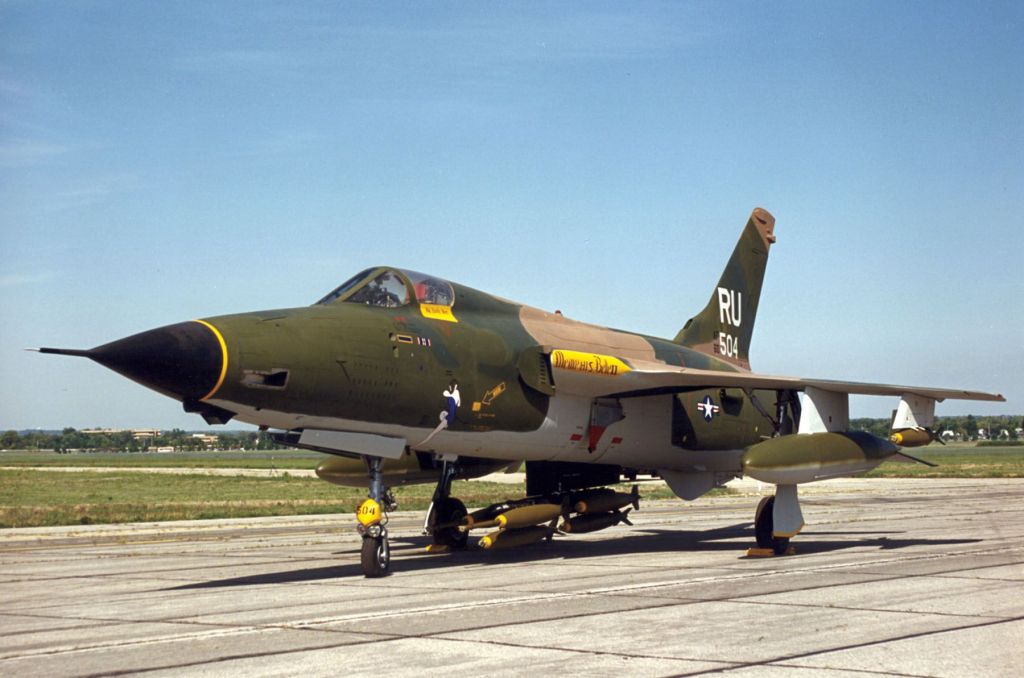
As a three level everyone has to learn the ropes and working in high security and restricted spaces much more learning needs to take place. Not only follow up from boot camp training but more specific machine shop training. Workbooks and training films set the path for attaining a five-level rating. Until that point no one can go out alone unsupervised to work on the flight line or other restricted areas. The good news is that as a three level you can’t be called to standby at night in case of emergencies. That requires a 5-level rating. To that point there is more leisure time available. It is best to take advantage because once the five-leval rating is attained the workload increase exponentially. The F-105 is a fascinating aircraft and at the time a very sophisticated one. It had been built and designed to deliver a nuclear warhead in the belly and once released it was designed to fly belly up where a blast curtain would move forward to protect the pilot from the flash. The belly bombay doors were long and slim. They separated in the center where the bomb would be released. During the Vietnam Conflict a fuel tank was inserted into the belly cavity and external bomb racks placed to carry an assortment of weapons. The Wings that were designed to attach fuel tanks but could also carry a bomb rack on the wing and placed closer to the fuselage than the fuel tanks. They too could be loaded with various types of missiles and bombs. The F-105 was also designed to air re-fuel which allowed it to fly from bases in Thailand to Vietnam and return by being re-fueled in route. It would be shortly after attaining a five-level rating that our recruit was permanently moved to his next duty assignment in Thailand.
Korat Royal Thai Air Force Base Thailand
On arrival to Korat Royal Thai AFB, Thailand the landscape was a little different only because of the tremendous work that had already begun in earnest to the infrastructure of the base and the surrounding landscape. It was dry and hot unlike November in Kansas where it could easily be snowing. The flight line was a very familiar site although some of the arteries of the runway were still metal PSP rather than concrete. The runway and taxiways were all complete. In the distance two long rows of F-105s both D&F models were perfectly spaced and parked some with weapons already hung on their pylons. Later steel revetments would be built between every airplane.
The travel group dismounted out of their air taxi for the last time, but found it odd that all the buildings away from the flight line were wooden structures. There was a row of maintenance structures, on the flight line, which were half-moon galvanized metal Quonset Huts open on both ends and standing 20-30 feet or more tall in the center. Once you left the flight line all the wooden building had wooden walkways guiding you to their entrance and exists. There were drainage ditches everywhere. When the first rains came it was clear why all these weird structures were in place.
The basic resources were all clustered together and the living quarters spread out for what appeared to be miles beyond the core community. New hooch’s were under construction and a city was evolving. In the three hundred and 60 days our recruit was in Thailand the evolution was staggering and yet so exciting. The smell of teak wood from the construction of the hooch’s was always in the air. A new Chow Hall was most exciting to see although the food seemed to degrade. The outdoor field kitchen with huge pots on gas burners would be long gone and fresh eggs gave way to powered ones. Above all though what remained the same and was most revered was the Post Office. No flag meant no mail had arrived. Red Flag meant mail and a green flag meant a second load of mail had arrived the same day. That rarely happened but when it did it was wonderful. Our recruit was very fortunate to get something at almost every mail call from the love of his life in Wichita.
355th TFW F-105D
On 13 April 1962 the 355th Tactical Fighter Wing was established and activated at George AFB, California, being equipped with the new F-105 Thunderchief. After a period of organization at George, the wing was assigned to McConnell AFB, Kansas, temporarily becoming the host unit at the base.
The unit transferred to the Takhli Royal Thai Air Force Base in Thailand in 1965. During the next five years, it flew more than 101,000 sorties over North Vietnam, dropping 202,596 tons of bombs and destroying 12,675 targets. The wing’s pilots were credited with twenty airborne kills of MiG aircraft and eight aircraft destroyed on the ground. Nicknamed “PACAF’s Pride,” the unit received three Presidential Unit Citations and three Air Force Outstanding Unit Awards with the combat “V” device. It is also noteworthy that, of the twelve airmen awarded the Medal of Honor in the Vietnam War, two belonged to the 355th Tactical Fighter Wing: Majors Merlyn H. Dethlefsen and Leo K. Thorsness.
The squadrons of F105’s from McConnell assigned to Korat Royal Thai Air Force Base became known as the 388th TFW. In years following the wing got F-16 aircraft and participated in conflicts such as Desert Storm. The 388th is now employing F-35 Lighting II aircraft worldwide.
The 355th was inactivated at Takhli on 10 December 1970 as part of the drawdown of US Forces in Southeast Asia in the early 1970s.
The 355th was reactivated at Davis–Monthan Air Force Base in 1971, being assigned to Tactical Air Command. Initially, the wing had four squadrons (333d, 354th, 357th and 358th) equipped with the new A-7D Corsair II ground air support aircraft. It achieved operationally-ready status in 1972. In late 1972, the 354th Tactical Fighter Squadron deployed its Corsairs to Korat Royal Thai Air Force Base, Thailand and was attached to the 354th Tactical Fighter Wing (Forward Echelon), which had deployed to Korat from Myrtle Beach AFB, South Carolina. From Korat, the 354th, and later the 357th, which replaced the 354th TFS in June 1973, conducted combat operations first in South Vietnam, then in 1973, in Cambodia, supporting the Lon Nol Government until 15 August 1973 when US combat operations in Southeast Asia were halted by Congress.
-Inside look of the F105 Thunderchief Pilots-
100 Missions North in the “Thud”
Achieving 100 missions over North Vietnam in an F-105 “Thud” had particularly special meaning. During some periods, it was more likely than not that an F-105 Airman would be shot down at least once during his tour and the odds of completing a 100-mission tour were not good.
Though they were fighters, the F-105 Thunderchief was the primary bombers of the ROLLING THUNDER campaign. Thud pilots constantly flew bombing missions over very heavily defended targets. They often attacked these same targets several days in a row. Moreover, F-105 crews flew dangerous Wild Weasel anti-SAM missions. Thuds flew in the 355th Tactical Fighter Wing (TFW) at Takhli Royal Thai Air Force Base (RTAFB), Thailand, and the 388th TFW at Korat RTAFB. (Our recruit served here)
The USAF lost 334 F-105s in combat (all but one over North Vietnam or Laos) during the Southeast Asia War. Most of these occurred during the campaign ROLLING THUNDER, and they represent nearly 20 percent of all USAF combat losses during the war. Accidents or malfunctions claimed 63 more F-105s. From 1964-1972, over one-half of all F-105Ds, F-105Fs and F-105Gs produced were lost in Southeast Asia.
The USAF rescued 99 downed F-105 Airmen, but another 214 were killed, missing-in-action (MIA), or became POWs (some of whom did not survive captivity).
In a very dramatic and freighting situation as our recruit was working on the flight line one day at Korat RTAFB, the emergency crews went ballistic and launched all fire crews and rescue helicopters and cranes that could pick up an entire F-105 airplane. When these kinds of events happened the first thought was a plane had got damaged over the war zone and was crippling back to home base. Those events were a little to common. However as everyone’s eyes turned to the skies it was communicated that one of the F-105’s which had been recently launched, fully loaded with a maximum payload of weapons had issues and was returning back to base on an emergency bases. Watching planes take off and land was a normal occurrence and the flight path very well known by all. The glideslope was at a 3 degree angle for approaching airplanes and touch down generally within the first 1000 feet of the runway. But on this occasion it was evident something was not right. The plane was coming in high and faster than normal. The runway was approximately 8000 feet long but the plane touched down very hard and closer to 4000 feet down the runway. All the onlookers knew very well this was a serious situation and fully expected the pilot to eject once he knew the plane would crash in a safe zoon passed the barriers at the end of the runway. While it seemed like hours the planes main gear wheels and tires gave way on touch down and sparks were coming from one wheel than the other. Again all on lookers were looking for the canopy to blow off and the ejection seat to shoot upwards and hopefully save the pilot. Ground ejection is almost always fatal but there have been exceptions. Many prayers were being sent up that’s for sure. Sparks were flying and the plane speeding helplessly down the runway to its end. A rescue helicopter and several fire trucks were in hot pursuit trying to catch up to the distressed airplane. Within seconds the crippled plane crashed through the chain barrier, at the end of the concrete runway, shearing all landing gear and wiped out the arresting wire intended to catch a tail hook. At that point the plane hit dirt and a dust storm erupted. From the us onlookers’ perspective the plane must have skidded several thousand feet and as always, the hope was to see a canopy blow and a seat eject. As the plane speed slowed the rescue chopper was close to catching up. (It carried a huge extinguisher dangling from a wire to start the initial fire fight once the plane stopped moving and the chopper landed). It became evident very quickly that the plane was on fire and with fuel tanks fully loaded the chance of an explosion was imminent. As the plane came to a stop that explosion did occur. The rescue helicopter broke away so quickly to avoid being hit by the blast that the fire extinguisher and the chopper were at the same altitude for a second. Time stopped and as the first responders lay helpless and out of harm’s way a second, third forth explosion rocked the ground. It may have been hours before crews were actually able to control the situation and safeguard the area, but the pilot never made it out of his seat. For the rescue staff it was almost unmanageable to clear the site. For those looking on the memory, is one that will haunt us forever.
Maintaining Sanity
The three hundred and sixty or so day’s away from home crawled by. The IT folks had printed a silhouette of a model and filled the entire body with 365 little squares. Each day a square was blacked out with the last few weeks exposing the most provocative parts of the model. A few months after arriving at Korat the base took on new life. As only Temporary Duty missions had come and gone from Korat there was little effort put in for entertaining the troops. First added was a new kitchen. It was beautiful and well equipped. The old field kitchen seemed to put out better tasting food and coffee, but to sit at a table inside an air conditioned building was heavenly. Several other buildings were added. A theater had been there all along but was modernized. There was a new swimming pool; a new Airman’s Club, baseball fields, hand ball courts and new housing that never stopped being built were added. The work hours were 24/7 working 12 on and 12 off. About once a month the day shift would trade with night shift. For the longest time there were no days off as there were only two machinists, but eventually the shop got more staff and one day off a week became standard. The Air Force had hired local craftsman to work alongside the fabrication branch soldiers and would help were they could. Our recruit Robert Flores admits that he quickly became enchanted with the Thai’s. As Buddhist their view of life and desire to please was paramount. They worked hard and tried to learn English quickly. All civilians were sent off the base every day and none left to work overnight. The staff that worked the housing units dealt with all the laundry, making the beds and keeping the hooch’s clean. There were approximately 20 men per hooch and they each paid $8.00 per month for the maid service. Services were very reasonably priced as was the cost of incidentals. For the smokers; cigarettes were 11 cents a pack bought in cartons. Liquor was cheaply priced but rationed. Happy hour at the club priced a two shot martini at 10 cents. The down side Robert said “with a wife and new born at home, you don’t get to spurge, most of the check went home”.
Robert talked about getting modeling kits for airplanes, cars and toys. That became a good way to pass the time and the members of the hooch worked together. There were always card games, checkers or chess to play when outdoor activity was not possible. The monsoon season ran May to October and rains blow in from all directions. The rain was heavy but more sporadic in the first few months, while more persistent in the final months. With average temperatures between 77 to 91 degrees Fahrenheit the short downpours created a steam bath most times. Out on the flight line was not uncommon to see temperatures well into the hundreds. With that when the temperature dropped to the lower temperatures it was easy to get cold at night. November to February brings more comfortable weather to Thailand, but can vary depending are where in the country you are in. Korat (Nakhon Ratchasima) is said to be in the lower northeastern part of the country. With all there was to take your mind off your being in support of a conflict for your country it was still very difficult to not miss home. Hugs and kisses is not something you find in the jungle. The excitement of fulfilling your obligation and seeing your efforts fulfil the mission of the airbase is exhilarating. Patching bullet holes was very common. As machinist the time was spent insuring specialist could get into their area of expertise in and around the airplane. Access panels were generally held in place with hundreds of cross point screws and inevitably the specialist would strip out the cross point in trying to hurry to remove a panel. A skilled machinist could break that screw loose for easy removal in seconds. There were other more challenging hardware to remove and other tasks that required experience with lathes, milling machines and other metal fabrication equipment, but screw removal was always a big issue. Robert talks about the time he was called on to help remove a panel just a few feet from an air intake with the jet engine running. Not only was it so loud, earplugs were useless, but getting anything sucked into the air intake would ruin the fan blades and scrap the mission. Machinist were revered by many for their ability to help get access to a leaky hydraulic pump when the plane was loaded and ready to take-off, but was extremely commended when removing a screw while straddling a 3000 lb. bomb. The comradery was great due to the fact that machinist came in contact with all specialty shop personal and every area of the airplane.
The experience of service to your country is one that will never be forgotten, but neither will the cost of the stress and anguish that being away from loved ones brings. Robert talks about his greatest regret in service to his country were missing the birth of his first child. Not being able to be there to support his wife as she went through some very rough times giving birth. The minutes and hours turned to days and then months. With ninety days left to serve in Thailand it was customary to buy a bottle of Seagram Seven, which in those days came with a yellow and black ribbon around its neck. That ribbon was worn on the top button hole of your fatigue shirt without one person suggesting you were out of uniform. The wearing of that ribbon was a reminder that your time here is almost up. For many leaving Southeast Asia was not permanent, however. They would be ordered back to start blacking out the blank picture of the model all over again. Robert says that “as much as he loved serving and doing what he was trained to do that he would never allow himself to not be with his family in time of need ever again”. We owe our military personal a great deal of respect and gratitude for being torn away from loved ones and then be willing to do it again for the sake of loyalty and pride for our country.
Three hundred and Sixty Days have passed since the C-130 lifted off in Wichita, Kansas. One short ride from Korat to Bangkok and one day of modern living on marble floors and with flush toilets was indescribable. Robert had a fellow from Wichita that has been assigned the same fight schedule back to the US as his. Richard Whitchurch was a staff Sargent and has served 8 years in the Air Force. He was just as excited to be going home as anyone. Richard & Robert both spend about 24-48 hours in Bangkok before bordering a charter flight to the US. There is a need to assimilate back into modern living, Bangkok was theirs. They will be stopping once at the least, but total flight time to the US is approximately 16 hours. Korat, Thailand is 11 hours ahead of San Francisco time. The flight leaves about noon from Bangkok or 11PM in California. With stops Richard and Robert arrive late in the afternoon the next day at Travis AFB, California. Customs takes forever to process through. The Boeing 707 jet liner had been full. Tickets or flight information to Wichita is still not established. Robert recalls crossing the golden gate bridge nearing midnight. At the San Francisco airport Robert is able to reserve a seat on a Delta 880 flight to Wichita. However it does not leave until 8:00 AM the next day. Totally wiped out Robert finds a place to sleep within the airport and catches his flight to Wichita which makes a stop in Dallas, Texas. The anxiety is over whelming as the flight from Dallas to Wichita put Robert at the very back of the plane so he is one of the last to disembark. He is into the jet way before he is able to catch a glimpse of his wife Donna and his never before seen first born Marie Estelle. Donna’s family has come to greet Robert so it was an eventual ride home. Marie doesn’t want much to do with that strange guy she has never met.
Rest & Relax Briefly
The orders had already been issued while in Thailand as to where the next duty assignment would be served. There was approximately 30 days of life with family in Wichita and in San Antonio before the new family of three would start out to the new duty station, Mountain Home AFB, Idaho. It was winter, the first of December and heading north from Kansas to Idaho looked a little scary and did prove to be very challenging.
After Marie was born Donna went right to work. To keep from tying up Mom Shelton through the day Donna took on a night shift at Boeing. Mom could deal with Marie in the evening and put her to bed early. By the time Marie woke up Donna would be home, although very short on sleep, took the reins of caring for Marie every day.
This went on for seven or eight months and Donna took on as much overtime as she could so was able to buy a cheap little car (a used Renault), helped with living expenses, groceries, but always made time to write letters and saved enough money to get the family on the road to Idaho debt free. Brother Stacy was continuing his education and took a night job at Boeing as well. That made carpooling possible at times which was a blessing. Life was good as Mom & Dad Shelton had moved from a very small house on Gold Street where Donna and Robert had first met, to a bigger home on E. Conamore St. With Donna, Marie, and Donna’s siblings, Stacy, April and Kent Mom & Dad Shelton would have a full house.
Military pay is not sufficient for a couple to live, especially with a new born on the way so on news of the relocation to Thailand Robert & Donna moved out of their first little apartment, parted with their sporty little 1963 bright Red Dodge Dart GT and moved in with Mom & Dad. That was a life saver.
The day arrives when it is time to leave for Mtn. Home, Idaho. With the many challenges facing the new family it had become apparent the Renault was not going to be able to tow a U-Haul across the city much less over the Rockies. They had to get a bigger and more powerful car. In haste and with a generous loan officer the couple had acquired a stripped down but brand new 1966 Chevy II they could afford. No A/C, no radio but with a powerful 6 cylinder engine which accepted a tow bar for hauling. $1800.00 was the sticker price. The 4×6 foot trailer easily held the few possessions the couple had and a set of snow chains for safety were bought on the way out of town. “Mtn. Home AFB, Idaho or Bust” Leaving the security of family was not a consideration. Robert was 20 and Donna 21 years old and Marie 9 months. Saying goodbye was hard as Marie was the first grandchild for the Shelton’s and they had seen her grow from birth. Grandpa may have had the hardest time, but his pride and joy Kent was still just 5 years old.
Every effort had been made to find out how the roads might be like on the way. At that time according to the Kansas Highway Patrol the passes in Colorado were closed in the high elevations. As unlikely as it appeared the roads through Wyoming were open across the Rockies. Robert laid out a road map that would take them north out of Wichita and into Nebraska where they could pick up a highway that would get them clear to Idaho via a small portion of Utah. Today that would be I-80. The first stop as the end of the first day drew near, the highway system of the times put them in Scotts Bluff, Nebraska. Ironically, they would check into the Alamo Motel. It had been a long day, and everyone drained. The weather had been good, and trip uneventful stopping as needed for rest stops and gas.
The second day of the journey started out very well. Their breakfast was great and sandwiches from the picnic basket provided by family in Wichita made for a great lunch. The road took them now via Cheyanne, Wyoming and straight west toward Logan, Utah. Many months later Robert & Donna would find out that the passes in Colorado were open and may have made for a better route. However, this day turned into a nightmare. As the family drove into the higher elevations the day went for good to bad to ugly. The passes in Wyoming had become treacherous and snow packed. No one was allowed to proceed without chains. A quick stop at a service station and the new set of chains were mounted on the rear drive Chevy II. Good thing they had thought of that, but as they started west the chains started banging on the wheel wells as if a part of the chains had come lose. Robert stopped and made every effort to use stretchers and to insure the chains were mounted properly. They were on right but unfortunately the noise continued getting louder at times. With Marie trying to sleep the noise was deafening. Robert decided the damage being done to the brand new car along with the noise had to stop. They would have to risk going forward without the chains and hopefully the new tires would help. Robert stopped and took the chains off. It was cold; it was snowing and the day fading away. As they pressed forward they could see on the map a small town was not far, they would go slow and make it there. It seemed like a life time at times the road invisible. The stakes used to measure the snow depth marked the path and 100 foot drop offs were right outside the window. It got so bad Robert thought the noise and the damage to the car was not worth endangering their lives and took the time to put the chains back on. As they arrived at the next town there was nothing there. No motel or any sign of life anywhere. The next town was miles away and the night getting darker, but they pressed on. The trip that today takes 7 hours took the Flores 15 hours as they ended up in Kemmerer, Wyoming. In hearing the story of the Donner family of Donners Pass Robert says “I think a have a sense of what they faced”.
The third day of the journey took the family to lower elevations, better weather and no need for snow chains. The road took them around Bear Lake and on to Pocatello, Twin Falls, Idaho and following the Snake River. It was not yet dark as the Chevy II with the U-Haul still in tow arrived at the main gate of Mtn. Home Air Force Base.
A New Life Begins
Entrance into the base is fairly easy and the first place to go is the bachelor’s officer’s quarter or BOQ to get temporary housing. Indeed the Flores family is received and given a place to stay. It is a hotel type environment where two adjoining rooms share a bathroom. It is very quickly determined that on base housing is not an option and that the Flores will have to find a place to rent or to buy in town as soon as possible. BOQ housing is temporary and a time limit is established.
Next door in the BOQ is a new Chaplin which has just arrived to manage the affairs of the religious needs of the soldiers and their dependents stationed here. It may have been a Saturday when the Flores arrived as it sounded to them like the conversation from the Chaplin’s quarters were centered on his needs to prepare for the next public service at the base chapel. It is sad to say that some of the conversation, which we could easily overhear, did not contain language which Donna & Robert were accustomed to hearing from a man of the cloth. It was rather crass and vulgar. In any case the rules were simple, if you need the restroom you simple lock the door to the other apartment and open it when you done. Both door remained closed but unlocked otherwise. The Flores was glad to have arrived and as the new week begins it was “In Processing” for Robert and house hunting for Donna and Marie. It was a sellers’ market and the availability of rentals was limited. Donna finally found a house that had been vacant for a very long time, but was affordable. She would find out later why the house stayed vacant so often, but for now it would be home. There was a large front room, kitchen, a bathroom and two bedrooms. The second bedroom became a catch all as the three all slept in one room.
Mountain Home, Idaho is a small town made up largely of government personal and survives only due to the operations of the Air Force Base. It is rumored that one Base commander ordered that all personal be paid in cash and the payroll be that in $2.00 bills. It was quickly realized that every one of the residents was directly impacted and survived because of the Air Base. A substantial sized Job Corp conservation station not far up the mountain was also a crucial resource for the city’s survival. The town was manipulated by the federal government.
With only the one car and the base 10 miles away from the city Donna was forced to stay home and care for Marie. Donna was a certified Key punch operator and highly skilled in data processing. However the town was so small that everything was still being done the old fashioned way. Any jobs at the base were very limited with lines waiting for an opening. The opportunity to get a dual income was just not there. In retrospect the lifestyle was just horrible. Being strong folks of faith Robert and Donna found a small church to attend. Few friends were made there although through the Air Force and some temporary passing-by cable company employee friendships where made and some social activities abound. Marie celebrated her first birthday in their first house and other parents with similar aged kids attended the party. Marie’s first action when presented with her cake and one candle was to stick her thumb in the cake and put it in her mouth. Marie was a thumb sucker and all efforts to stop that habit were in vain as she sucked her thumb well into her high school years.
Robert came into the Machine Shop as the second top ranking member and had four airman 3rd class newbie’s right out of tech school 50130’s to train. The shop was managed by one Master Sargent William Blaney. He was a fantastic leader and was very protective of all his men. It was soon after Robert arrival from Thailand that a William “Bill” Wilgus came on board. He had recently been stationed in France. He was the same Rank as Flores, E3 but Flores had been in the service longer so he outranked Wilgus with what is referred to as “by time and grade”. Flores had 18 months to serve before he could discharge and Wilgus maybe 24 months. At the next promotion cycle both Flores and Wilgus attained the rank of E4. At that time the rank was referred to as Sargent. It was Airman First Class before and today referred to as a Senior Airman. Three level recruits could not work on the airplanes alone so until Flores arrived Sgt. Blaney had been carrying the load of flight line maintenance all on his own. One or two of the Newbie’s accompanied Sgt. Blaney on the calls however when Flores arrived that lifted the burden tremendously off Sgt. Blaney. Once Wilgus arrived Sergeant Blaney no longer went on work orders to the flight line at all. Wilgus and Flores carried the load and since someone had to be available 24/7 Wilgus and Flores would trade off on-call duty after hours. Within a year of Flores’ arrival, the E3’s passed their “On the Job Training” and were awarded their 5-level rating of 53150. Now the work got spread among 6 instead of just 2.
It was shortly after this all went down that Sgt. Blaney Retired and within days a new Leader Tech Sargent Paul Cullison arrived to lead he shop. Paul was not only a great leader himself but basically turned over all responsibly of day to day operation to Flores & Wilgus while insuring all duties were completed in a very precise and consistent manner. Flores and he became very close as Paul and Robert were married and lived off base while the rest of the machinist lived in the dorms.
The 366th Tactical Fighter Wing consisted of four Squadrons of Model RF-4C airplanes. The mission of the base was to train pilots to fly air recognizance missions using highly suffocated high altitude/ high speed cameras.
It was August of 1967 that Donna became pregnant and times had gotten a lot harder for the family. The reason the first house the Flores moved into was too often vacant was that a murder had been committed there years prior and it seemed evil spirts still visited. Donna called Robert at the Airbase one day that she had had a physical contact with an evil spirt and could no longer live in the house. That night there was a disturbance in the bedroom where the family slept and Donna felt she was being pulled out of bed. Within a couple of days Robert & Donna moved into a mobile home not far from the house. The newbie’s at the base helped them move in one day. The high cost of that home would force Donna, Robert and Marie to move again and then again until they ended up in a travel trailer 39 ft. long by 8ft wide. The last travel trailer they rented would have been their fourth move and hopefully their last within 18 months in Mtn. Home, Idaho.
To say there were no good times would be wrong. It did appear the bad overshadowed the good times a lot of the time. Christmas and New Year of 1967 was quiet and uneventful. It had been cold and snow was a common occurrence. The family in Texas and Kansas had sent gifts for Marie and there was a cute Christmas tree trimmed beautifully by Donna & Marie. One very exciting occasion came on February 10th , Marie Estelle celebrated her 1st birthday. Robert made a wooden potty chair and painted it bright blue as a gift for Marie. The seat was covered with Plexiglas for easy cleaning. Marie took to using the chair very quickly which lessened the need to wash diapers as all that the family used for babies in those days was cloth washable diapers. Disposables were very expensive if they even existed at that time. Washing diapers by hand and expecting to dry them outside was not an option since they would freeze before they would dry. In hoping they could get them dry before they froze, many times stiff icy cloth squares was all that made it in the house. Crudely made clothes hangers strung around the kitchen had to make do and did for drying clothes. As spring arrived the days warmed and some outside activities brought good memories. A trip up into the Mountains was always fun as Anderson Ranch Dam and Lake was not far. The thirty-five-mile trip allowed for swimming, fishing and great views. It is not hard to understand why mountain folks enjoy that lifestyle.
There several very special relationships there were made while in Mtn. Home. It is hard to say which may have been the most memorable. There were those who helped emotionally, those who helped financially, those who helped religiously and some that helped in all areas. The longest running relationships have to be with a beautiful couple and still friends today, Georgie & Jim Raulerson. It was in Robert & Donna’s third move that brought Geo & Toppy Raulerson into their lives. They had moved into a little camper trailer and lived there through all there time left in the service. It was right across the narrow dirt pathway from Bob & Donna’s trailer. Georgie had put a pause on her career while Toppy was in Vietnam and continued until they completed Toppy’s career in the Air Force in 1968. Georgie was a registered nurse and specialized as a surgical room nurse. They had elected not to have children at that time, so Marie & Georgie became soul sisters very quickly. Donna learned much from Georgie and Marie got lots of TLC as well as got her ears pierced. Donna took the opportunity to also have her ears pierced as well. As the friendship grew and the time whizzed by Toppy being an outdoor sort of guy decided that everyone should crowd into their cream-colored Volkswagen Beatle and road trip past Anderson Ranch Dam and on up to the Trinity Lakes by Pine, Idaho. The Lakes are pristine made up of snow melt and no motorized vehicles are ever allowed in the water. Trinity Mountain is the tallest peak in the Boise Mountains at 9700 feet. The lakes are at 7900 feet and compares with Mtn. Home, Id at 3150 ft. This would be a new adventure for Robert and Donna. With food and drink and formula in tow the path along the log roads of Anderson Ranch Dam and the return trip down by Pine, Idaho the trip would take all day. The cook out at the edge of the Little Trinity Lake was delicious as both Donna and Georgie were great cooks. On another occasion Georgie has invited everyone into their little camper trailer to experience “Crepes”, they were delicious. In 2024 around Christmas after 58 years as friends Robert & Donna exchanged a phone call with the couple. Long retired Georgie had set an art room in their home in Boynton Beach, Florida. They bought that home after leaving Mtn. Home and have traveled a lot but never moved and are still there today. In her talent as an artist and an RN Georgie created etching and made them into Christmas cards. The Flores’ get one every year.
Another very special friendship in Mtn. Home was with Sgt. Paul Cullison and wife June. There was Patrick & Patricia Chubb and daughter Marilyn too. (Donna & Robert were part of her wedding party as bride’s maid and usher) Of the new recruits Raymond McMahon, since married, is still in contact. There was Gus & Libby, the trailer park owners, who gave Robert a Job to work on their cleaning crew and take sole responsibility of the contract to clean the administrative offices of the Job Corp conservation station. The extra income came at the most opportune moment, as Donna soon became pregnant with second daughter Laura Lynn in that time. Even with that Donna & Robert made their last move to a camper trailer the same size as Georgie and Jims. Mr. & Mrs. Brown were the owners of that park and as with Gus & Libby Robert worked to manage the park for extra pay. Fuel oil was the heat source and was very expensive. Mr. Brown covered that cost. The winter turned to spring and term to deliver Laura was drawing near. Having had a favorite Dr. in Wichita that had delivered Marie and Doctored Donna most of her life, it was decided that Donna & Marie go back to Wichita to deliver Laura. Flying home would have to come quickly as after a certain time a pregnant woman was not allowed to fly in those days.
The first day of the rest of our lives
Fast forward and Donna has been staying with her Mom & Dad. Stacy has been married to wife Judy; but the house is still crowded as Mom & Dad had moved from Conamore St. into a modern 3 bedroom 12ft x 60ft Mobile Home. The Silver Spur mobile home park is familiar as Mom Shelton’s younger Brother Larry Peck and wife Valerie Taylor Peck had bought a home and moved into a beautiful double wide trailer across the road in The Minor Trailer Park. Stacy & Judy are living in an apartment with hopes of teaching jobs coming available. With delivery time getting close Robert arranges for a leave of absence from the airbase and is able to arrange a free trip to Wichita via courier airplanes that flew between bases. With the right timing Robert is able to catch a “Hop” from Mtn. Home to Las Vegas with a short stop at Hill AFB in Utah. The day goes by quickly but the next plane heading toward Kansas would be the next day and take him to Waco, Texas before catching the last leg of the schedule to Wichita, Ks. The thought of hitching a ride into Las Vegas and experiencing in real life a place only seen in movies Robert new that money spent would be better served for use in Wichita.
Robert always has loved flying and the C47 Goony Birds used as couriers let Robert go back to remembering his first ride in a C-47 back in Thailand. The morning breaks, Robert has sleeping on a couch in the Base Operations Building where the courier planes check in and check out. Shortly he is in the air to Waco, Texas aka Connelly AFB. It is approximately 4 hours away so by early afternoon the plane is down. With a small suitcase and a briefcase in tow Robert checks in with Base Operations to get on the plane to Wichita scheduled to leave that afternoon. Unfortunately, the weekly flight plan to Wichita has been cancelled and no other courier planes would go there for another week. The Waco base will be closed by August of that year 1968, so things were already starting to slow down probably. So plan B, there was no plan B. Talking to other folks expecting to get on that flight the ideas were countless, none of which appeals to Robert. One idea might have merit, hitchhiking as money was short. Yes, hitchhiking that’s the ticket. The highway was a couple of miles away and if he could get there it might be rather easy to get a lift. As he started the walk a “Good Samaritan” asked if he needed a lift. On explaining his predicament the fellow said, “I can get you to the highway out close to the edge of town where getting a ride might prove timely. The day was getting away. Wichita is 7-8 hours away by car, but Robert took the help and ended up right where the Good Samaritan had suggested. Interstate 35 went right out of Waco, Dallas, Oklahoma City and right into Wichita. I seemed like just minutes later and businessman in a new fancy truck pulled up to see what he could do to help. Soldiers in uniform were trusted, and folks were gladly willing to help. He said he was not going as far as Dallas but would get me to a fork in the road where a lift to Dallas should be easy. That was good enough for me. At the fork to Hillsboro or Dallas the nice man left him in a perfect spot. There was still daylight and traffic was steady. Give God the credit, again the time felt as if just minutes had passed and a lovely Latino couple with two kids in the back seat made room in the front luggage compartment of their VW Bug for my small suitcase I held on to my briefcase. They were going to Dallas but no further. The trip was short about an hour. The couple asked where they could take me. As the day faded Robert decided he would check on a bus trip from Dallas to Wichita so asked if they could get him to the bus station. They said the bus station was a little out of their way but would do it. I offered gas money, which they refused, but Robert remembered he had bought a package of Hostess Twinkies in hopes of giving them to Marie on his arrival. Instead, he asked the parents if the kids could have them. They agreed and he quickly became a hero to two little ones.
At the Bus station the fare to Wichita was reasonable but again no buses until tomorrow. I quick call on a pay phone to the airport suggested a flight leaving for Wichita in the next couple of hours and military stand by seats available. He had to be there personally. As luck would have it a taxi driver could get him to the airport intime however he had a passenger already booked and he would have to get her permission for Robert to ride with her to her place before going the airport. The fare would start from the women’s house. YES! Everyone agreed, the trip went as planned and Robert got boarded. Flight time from Dallas to Wichita was about two hours which made arriving in Wichita very late. Mom kept Marie and Donna & Dad Shelton got to the airport and picked up Robert.
The time went by quickly and the time for Robert to get back to Mtn. Home went by just as quick. Donna’s due date passed and there was no sign of the baby coming. Robert had booked a flight back and made arrangements to be picked up in Boise, Idaho to be driven back and could not be changed without great expense. He had already called back to base and got an extension on his leave. Before his time ran out Laura Lynn Flores arrived. It was May 10th 1968. With only 3 months left to discharge it was necessary for Donna to get back and start the process to leave Mtn. Home. I was afforded that Donna, Laura, Marie and April, Donna’s Younger sister fly home. They returned safely and Robert was able to pick them all up. Robert and Donna had moved into their last rental in Mtn. Home, so space was limited. April helped Donna as much as a little sister can but enjoyed more time with a girlfriend she made at the trailer park lying in the sun. Laura Lynn started life out in very bad shape as mother’s milk did not sit well and different tries to change formulas made things worse. The couple struggled with the efforts of the Doctor’s at the airbase as their last result was to confine Laura, but Donna could no stay with her. Well, that was not going to happen. As the days went on a plan was put into place whereby Brother Stacy and Mom’s Brother Larry would drive straight through from Wichita and brought Mom Shelton to help. Everything that was being done to help Laura was not helping and it became evident something else had to be done. Mom Shelton finally arrived and Stacy, Larry and April headed back to Wichita. Things were not well. Robert and Donna decided to take Laura to the local hospital in Mtn. Home where, in spite of the seriousness of the patient they were told that the Air Base had a hospital and military personal or their dependents were not allowed to be treated in town. Donna was fit to be tied and knew taking Laura to the Air Base meant leaving her there alone. She was not having that. In quizzing the Emergency room staff and Donna begging them for help they mentioned that if she and Laura where in Boise for example the hospital could not refuse them help. Boise was 39 miles away and it was already dark. With Mom Shelton caring for Marie, it was a no brainer to rush Laura to Boise. It was a bigger town with more qualified Doctor’s available. They arrived at the nearest emergency room, and the emergency room doctor took Laura right in. Laura was very weak at that point and food was not staying down at all. She was dehydrated and in critical condition. She was quickly admitted and all the necessary testing started. For the next few days Robert ran back and forth to work, Marilyn Chubb, now Tucker was kind enough to let Mom Shelton and Marie stay with her as she happened to be finishing up some college courses in Boise and had a n apartment there. Within a week Laura was back and feeling great. The emergency room physician who examined Laura the first night was a pediatric allergy specialist. Laura was allergic to Mothers milk and just about all the other formula they tried except one. Laura tolerated and thrived on “Baker’s Powered Whole Milk”.
There is no question that the selflessness of Stacy and Larry getting Mom Shelton to Mtn. Home. For Marilyn Chubb Tucker having an apartment in Boise, Idaho and Robert’s supportive military buddies carrying his load, things could have been disastrous. The reality though it was Donna’s motherly instincts that saved Laura. The emergency room Doctor and staff at the hospital no doubt did amazing work. This event should be known as nothing short of a miracle. And to God be given the Glory. But God Bless Donna.
Back to Civilian Life
One Boys Life during Vietnam is over. He will spend two more years in an in-active duty listing with no worries of being away from family and loved ones again. He has sired two beautiful girls and has earned the title of a Father, Veteran and a Man.
August 6th, 1968 this phase of the commitment to the country is done. On August 7th 1968 the days are long, hot and the work hard. Filling the small U-Haul trailer is a little harder since with the family growing so the belongings have increased. The Chevy II has done well and will be very capable of towing the U-Haul back to Kansas. Mom Shelton has hung on to help get us home safely. By helping Donna and I with the babies it has been a gift that will not be forgotten. Without an air conditioner and with no radio Robert happens find a used window unit that is filled with ice cubes and rolled up into the passenger side window of the car is allowed a cool breeze to keep the passengers comfortable, genius! So, goodbye Mtn. Home, Idaho and thank you for helping us survive and live another day.
As for a radio, well Mom Shelton has played piano all her life and has hundreds of Christian songs and children’s nursery rhymes memorized. There was a lot of singing heading home. It was approximately 1300 miles and it would take close to 20 hours of driving. It was a relatively calm drive going home. There was a little scare at a hairpin turn approaching Bear Lake. The loaded trailer doesn’t slow as fast as a driver might think.
The road map would take the family back similar to the same way they had come to Idaho to start. This time however there would be much better road conditions. They would go through Logan, UT., Kemmerer, WY and on to Cheyenne, WY. This time they would take a detour on I-25 to Denver, CO and catch I-70 East to Salina, Ks and finally down the I-135 home to Wichita. The hope was to be in Denver on the first day and get clear to Wichita on day two. On August 8, 1968, Late in the day the crew is disembarked on home turf as planned.
Food for Thought
The primary events that led the United States to withdraw from the Vietnam Conflict were the escalating anti-war movements at home fueled by the high causality rate of US soldiers. The public shock caused by the TET offensive (1968), the growing political pressure on the government due to public dissent and ultimately the Watergate scandal which weakened Presidents Nixon’s ability to maintain US involvement in the war. That led to the signing of the Paris Peace Accords and the withdrawal of US troops in 1973. Heroes of the war came home to protest, disrespect and vulgar slurs. Words, like baby killers, murderers, gooks and Viet Cong sympathizers voiced by anti-war protesters reflected the widespread public disapproval of the war and the negative perception of our service members.
It is shameful for any American to take this kind of attitude toward our young, courageous and dedicated young men and women who sacrificed so much to follow the orders of America’ leaders whom they trusted. President Nixon paid a big price for his errors, however his loss and that of the Politian’s who supported this war will never pay back the damage that was done to our troops. As a disabled Veteran Flores says he sees a great effort in effect to repay those still alive today. What is wrong is that our leaders are gaining considerable wealth while our fighting solders get thrown a bone. Those lost in the Persian Gulf War, the War in Afghanistan and the Iraq War are admiral conflicts to have been involved in but probably wars that could have been settled economically instead of physically. We must never fight a war again for any reason that does not impact our own borders directly. God Bless the USA. Immigrants are not impacting our boarders negatively.
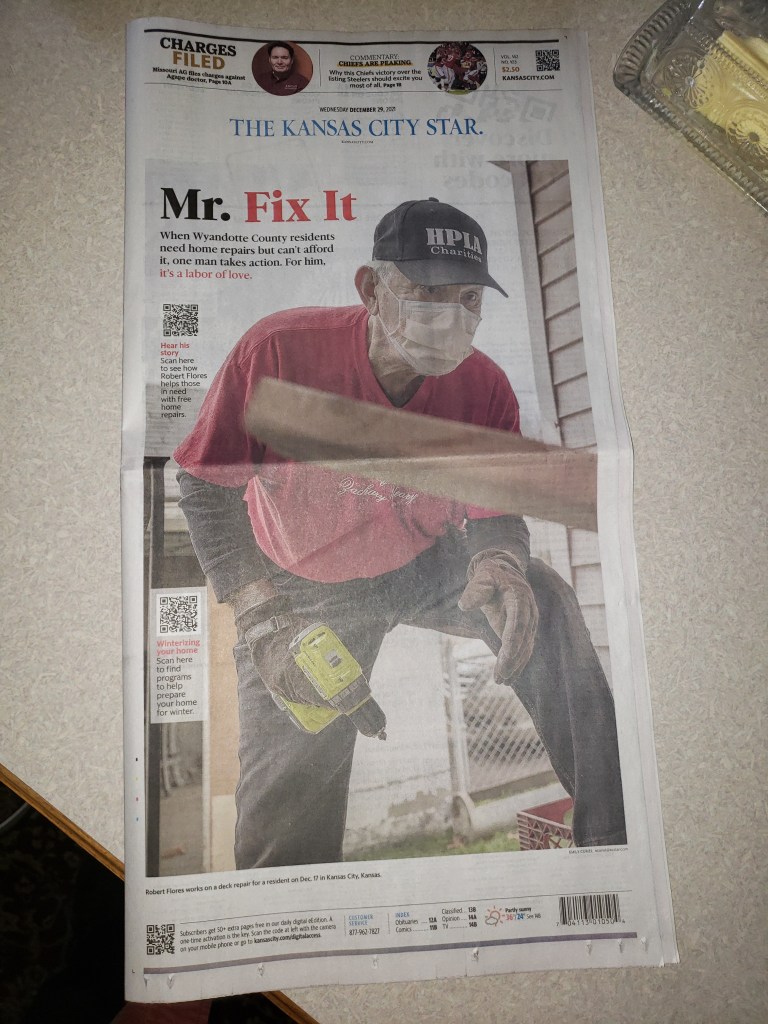

 HPLA Charities.org
_in_flight_with_full_bomb_load_060901-F-1234S-013.jpg)